Blog
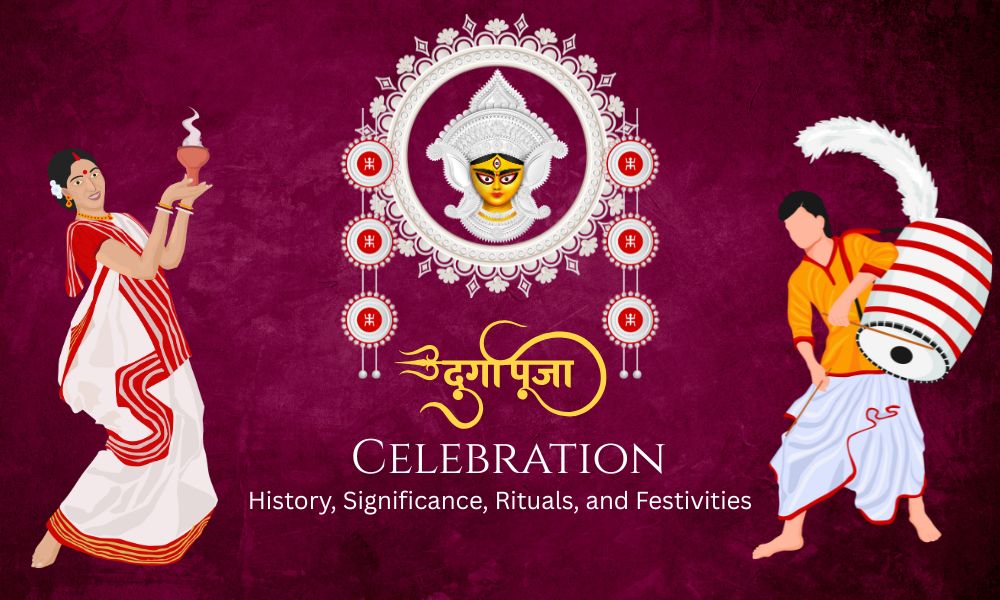
Durga Puja Celebration: History, Significance, Rituals, and Festivities
Introduction
Durga Puja, one of the most vibrant and widely celebrated festivals in India, is a grand tribute to Goddess Durga, symbolizing the victory of good over evil. Observed with immense devotion, cultural performances, artistic displays, and community gatherings, Durga Puja is not just a religious festival but also a cultural extravaganza. Celebrated predominantly in West Bengal, Assam, Odisha, Tripura, and Bihar, it has also gained global recognition, with Indian communities across the world organizing elaborate festivities.
This long-form guide explores the origins, rituals, traditions, and modern-day celebrations of Durga Puja, offering a comprehensive look at why this festival holds such deep cultural and spiritual significance.
The Origins and History of Durga Puja
Mythological Background
Durga Puja is rooted in Hindu mythology, where Goddess Durga is revered as the embodiment of Shakti (divine feminine power). According to legend, the demon king Mahishasura, blessed with invincibility against men and gods, wreaked havoc across the three worlds. To restore balance, the gods combined their powers to create Goddess Durga, who fought Mahishasura for nine days and nights before slaying him on the tenth day, known as Vijayadashami or Dussehra.
This victory symbolizes the triumph of righteousness over evil, light over darkness, and hope over despair.
Historical Evolution
While the worship of Goddess Durga dates back centuries, the organized celebration of Durga Puja as a community festival began in Bengal during the late medieval period. Initially, it was celebrated by wealthy zamindars (landlords) who hosted elaborate rituals in their estates. Over time, the festival evolved into a community-driven event, with local clubs and neighborhoods organizing public pujas, known as baroari puja.
By the 20th century, Durga Puja had transformed into a cultural phenomenon, blending religious devotion with art, music, dance, and literature. Today, it is recognized by UNESCO as an Intangible Cultural Heritage of Humanity, highlighting its global cultural importance.
The Significance of Durga Puja
Spiritual Significance
Durga Puja is not just about worshiping the goddess but also about invoking inner strength and resilience. The goddess represents courage, wisdom, and protection, inspiring devotees to overcome personal struggles and societal challenges.
Cultural Significance
The festival is a showcase of Bengal’s rich cultural heritage. From traditional dance forms like dhunuchi naach to the rhythmic beats of dhaak (drums), Durga Puja is a celebration of art, music, and community spirit. Pandals (temporary structures housing the idols) are often designed as architectural marvels, reflecting themes ranging from mythology to contemporary social issues.
Social Significance
Durga Puja fosters unity and inclusivity. People from all walks of life, regardless of caste, creed, or religion, come together to celebrate. It strengthens community bonds and provides a platform for collective joy and cultural expression.
Rituals and Traditions of Durga Puja
Pre-Puja Preparations
Preparations for Durga Puja begin months in advance. Artisans sculpt clay idols of Goddess Durga, depicting her with ten arms holding divine weapons, standing atop a lion, and slaying Mahishasura. These idols are painted, decorated, and installed in elaborately designed pandals.
Key Rituals
- Mahalaya: Marks the beginning of the festival, invoking Goddess Durga to descend to earth. Devotees listen to the recitation of the epic poem Chandi Path.
- Shashthi: The goddess is welcomed, and rituals begin with the unveiling of the idol’s face.
- Saptami: The day starts with the ritual of Nabapatrika, symbolizing the nine forms of the goddess.
- Ashtami: Considered the most important day, it includes Sandhi Puja, performed at the juncture of Ashtami and Navami. Devotees also participate in Kumari Puja, where young girls are worshiped as embodiments of the goddess.
- Navami: The final day of worship, marked by grand rituals and offerings.
- Dashami (Vijayadashami): The idols are immersed in rivers or lakes, symbolizing the goddess’s return to her celestial abode. Women perform Sindoor Khela, smearing vermillion on each other as a gesture of goodwill and prosperity.
Cultural Highlights
- Dhunuchi Naach: A traditional dance performed with incense burners.
- Dhaak Beats: The sound of drums fills the air, creating a festive atmosphere.
- Bhog: Devotees are served sacred food offerings, usually including khichuri, labra (mixed vegetables), and sweets.
Durga Puja Across India
West Bengal
Kolkata is the epicenter of Durga Puja celebrations, with thousands of pandals showcasing artistic themes. The city transforms into a carnival, with millions of visitors thronging the streets to witness the grandeur.
Assam and Tripura
Durga Puja is celebrated with equal enthusiasm, blending local traditions with Bengali customs. Pandals are decorated with regional motifs, and cultural programs highlight Assamese and Tripuri art forms.
Odisha and Bihar
In Odisha, Durga Puja coincides with the festival of Dussehra, with elaborate rituals and processions. In Bihar, the festival is marked by community gatherings and cultural performances.
Other Parts of India
In states like Maharashtra, Gujarat, and Delhi, Durga Puja is celebrated by Bengali communities, often alongside Navratri festivities.
Durga Puja Around the World
Indian diaspora communities have taken Durga Puja to international platforms. Cities like London, New York, Toronto, and Singapore host grand celebrations, complete with idols, rituals, and cultural programs. These events not only preserve traditions but also introduce global audiences to the richness of Indian culture.
The Artistic and Cultural Dimensions of Durga Puja
Pandal Art
Pandals are the centerpiece of Durga Puja, often designed as replicas of famous monuments, temples, or abstract art installations. Artists and craftsmen spend months creating these temporary structures, which attract millions of visitors.
Idol Making
The idols of Goddess Durga are traditionally crafted in Kumartuli, a neighborhood in Kolkata known for its community of artisans. The process involves using clay from the Ganges, symbolizing purity and divinity.
Literature, Music, and Dance
Durga Puja has inspired countless works of literature, poetry, and music. Rabindranath Tagore and other Bengali writers have immortalized the festival in their works. Cultural performances, including plays, recitals, and dances, are integral to the celebrations.
Modern-Day Durga Puja
Eco-Friendly Celebrations
With growing environmental awareness, many communities are adopting eco-friendly practices, such as using biodegradable materials for idols and minimizing plastic in pandals.
Digital Celebrations
In recent years, especially during the pandemic, virtual pujas and live-streamed rituals have allowed devotees worldwide to participate in the festivities.
Tourism and Economy
Durga Puja significantly boosts tourism and the local economy. From artisans and decorators to food vendors and performers, the festival provides livelihoods to millions.
Tips for Experiencing Durga Puja
- Plan Ahead: Major cities like Kolkata witness huge crowds, so plan travel and accommodation in advance.
- Pandal Hopping: Explore different pandals to experience diverse themes and artistic expressions.
- Cultural Programs: Attend traditional dance, music, and theater performances.
- Food Delights: Relish authentic Bengali cuisine, including sweets like rasgulla and sandesh.
- Respect Traditions: Participate in rituals respectfully and embrace the cultural spirit.
Conclusion
Durga Puja is more than a religious festival—it is a celebration of life, art, culture, and community. Rooted in mythology yet evolving with time, it continues to inspire devotion and creativity. Whether experienced in the bustling streets of Kolkata or in diaspora communities abroad, Durga Puja embodies the universal message of hope, resilience, and the triumph of good over evil.
As the rhythmic beats of the dhaak echo and the goddess’s divine presence fills the air, Durga Puja reminds humanity of the enduring power of faith, unity, and cultural heritage.
Devi Murtis for Puja